Skip to content

E-commerce Growth Specialist · Egypt

The ad is the last thing I think about.

Get in touch

MAHMOUD ELZAQLA · E-commerce Growth Specialist · Egypt

Mahmoud Atef smiling, in a striped polo.
Scroll downShopify · Meta · TikTok

I look at the competitors and the benchmarks, the product, the market, the customer, the store, the operations and the numbers. Then I look at the ad.

Read the full story
Results01/06

Every number, with its source.

From the dashboards themselves

Screens exactly as they are, from Shopify, the Odoo ERP, Meta and TikTok. Tap any one to see it full size.

25,000+
Orders handled and managed
EGP 10M+
Sales across e-commerce businesses

These are recorded sales and orders, not profit. I did this work myself, and every screenshot shows where it came from and the period it covers.

Any date range is the one shown in the screenshot itself. And if a table says "messaging conversations", those are chats, not orders.

Who I am02/06

About

I didn't start in Ads Manager. I started in the warehouse: the orders, the shipping, the stock, the factory.

I prepared thousands of orders, worked on the ERP, and followed the operation, the stock and the production. Over time I understood that the ad is one part of the system, not the whole system.

And with Bloomy I lived the full cycle myself, from choosing the product, setting the pricing and following the production, through to the ads, the website, the orders, the shipping and the returns.

So when I look at an ad, I don't ask how many orders it brought. I ask what happened to that order afterwards.

The result doesn't start at the ad.

  1. Product
  2. The ad
  3. The order
  4. Operations
  5. Delivery
  6. The business's bottom line
Mahmoud Atef in a circular frame, with the Shopify mark running round its edge.
Services03/06

What I do for an e‑commerce brand.

Five things that work as one system: the store, the ads, and the operation behind them.

  1. 01

    Shopify stores

    I build the store on Shopify with the buying experience in mind, not only the look.

  2. 02

    Meta Ads

    Facebook and Instagram campaigns, read against the orders and what each order earns, not ROAS alone.

  3. 03

    TikTok Ads

    TikTok campaigns where the creative, the angle and the message come before the spend.

  4. 04

    Conversion and order value

    The conversion rate, the order value, and the path from product page to checkout.

  5. 05

    Operations and scaling

    Stock, shipping, delivery and returns checked before scaling, so the operation can carry the demand.

And I'm expanding into Google Ads.

I'm not looking for a way to make the ads spend more. I'm looking for where the business can actually grow.

Case studies04/06

Some case studies from running the operation with clients.

I chose these three on purpose: with each one I started from building the store, then conversion, then testing the product, up to the first million EGP.

Open any figure to see what I did, the numbers behind it, and the dashboard it came from.

  • my own brand · Odoo ERP · the brand's whole run

    the brand's total recorded sales

    Odoo ERP · the brand's whole run

    stopped it after ~4 months

    What I did

    built the store, ran the ads and the operations

    4,544

    orders

    Odoo ERP

    EGP 145K

    ad spend

    Odoo ERP · whole period

    1,229

    orders through the store

    Shopify · 47 days

    5.44%

    store conversion rate

    Shopify · 47 days

  • a store I built and ran · Shopify · May–Jul 2026 · no ad spend

  • a store running now · Shopify · Sep 7 – Nov 11, 2026 · all channels

Tools05/06

Two calculators for before you spend on ads.

Two free calculators, no signup. Type your numbers and the result updates as you type.

The numbers filled in are an example. Replace them with yours.

Currency

Product profitability

Break-even ROAS and max CPA

The lowest ROAS a product needs to avoid losing money, and the most you can pay per order before you launch a campaign.

EGP
EGP
EGP
%
%
EGP

Break-even ROAS

2.37×

Max cost per order (CPA)
253 EGP
Margin before ads
42.1%
Target ROAS for 15% net profit
3.69×

Below break-even ROAS you lose money on every order. Above the target, you can scale the budget.

How it is worked out. A returned order counts as no sale, no product cost and no payment fee; shipping is still paid. Break-even ROAS is the selling price divided by the profit per order. The target leaves 15% of the price as net profit.
All channels together

MER and blended ROAS

Add up your spend on Meta, TikTok, Google and Snapchat, and see whether the whole store is profitable before you scale.

EGP
EGP
EGP
EGP
EGP
%

MER (sales ÷ total spend)

5.00×

Scaling zone: you can raise the budget

POAS (profit ÷ spend)
2.75×
Net profit after ads
175,000 EGP
Net margin
35.0%
Total spend
100,000 EGP
  • Meta 60%
  • TikTok 25%
  • Google 10%
  • Snapchat 5%

How it is worked out. MER is sales divided by all ad spend. POAS is the profit (sales × margin) divided by spend. A rule of thumb: above 1.3× is the scaling zone, from 1× to 1.3× watch, and below 1× the ads cost more than the profit they bring.

A calculation you do every day?

Send it to me and I will look at building it as a tool.

Send it on WhatsApp
Process06/06

How I think about growth

Not every growth opportunity starts with ads, and scaling doesn't always mean a bigger budget.

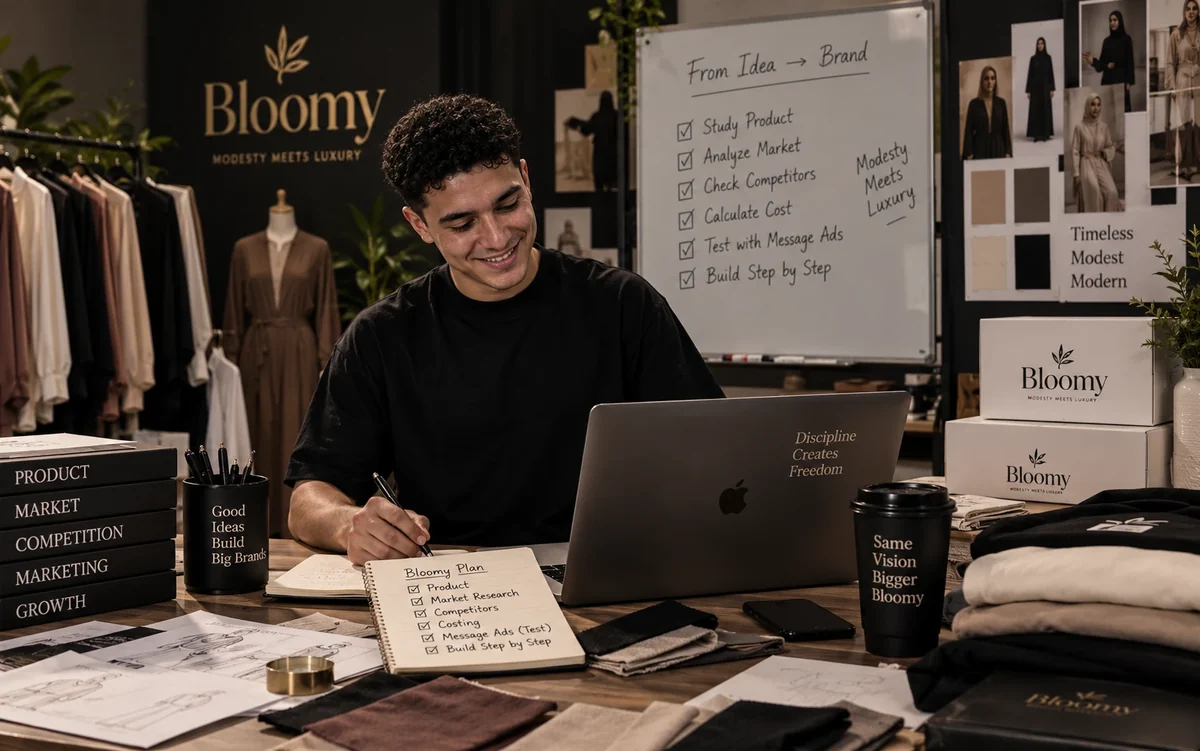
  1. Mahmoud Atef at a desk planning Bloomy: a laptop, a notebook, fabric samples and sketches, a clothing rail and a mood board behind him.
    01

    The business and the market

    Before I think about ads, I want to understand what we're actually trying to grow.

    • Why the product sells, and who is buying it
    • What the market and the competition look like
    • Where the opening for this brand is
    • And whether the problem even needs more ads
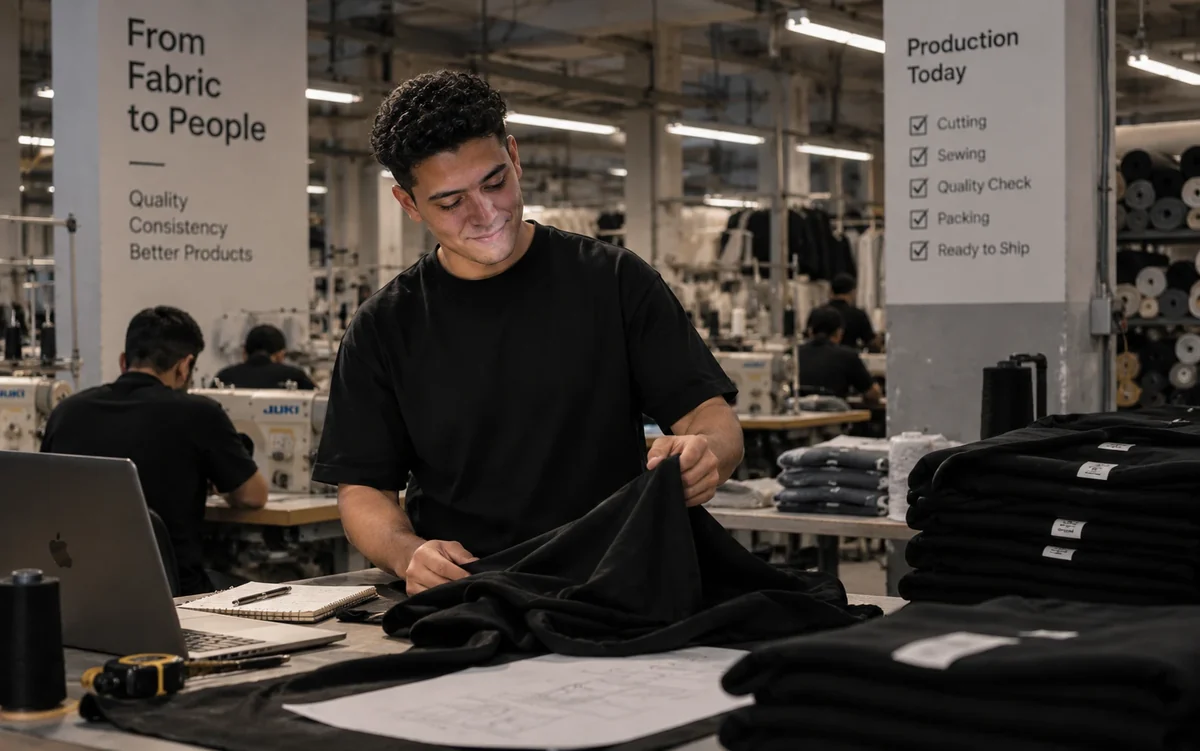
  2. Mahmoud Atef on a clothing factory floor looking at a piece of fabric, sewing machines, a working team and folded pieces around him.
    02

    The product and the offer

    Before I push for more demand, I look at whether the product has room to grow.

    • Is there real demand for it?
    • Are the price and the offer right?
    • Are there variations or features that add value?
    • Can we raise the average order value?
    • Or extend the product that already works, instead of hunting for a new one?
  3. Mahmoud Atef at a laptop with two screens, a storefront on one and a sales dashboard on the other, a growth-plan notebook beside him.
    03

    Marketing

    This is where advertising comes in, as part of the system, not as the system.

    • Creative, angles and the message
    • Segments and audiences we weren't reaching
    • Meta, TikTok and other channels when they earn it, and I'm expanding into Google Ads
    • The store itself: conversion rate and the buying experience
    • What each order really earns: ROAS, and ROI when the business data allows it
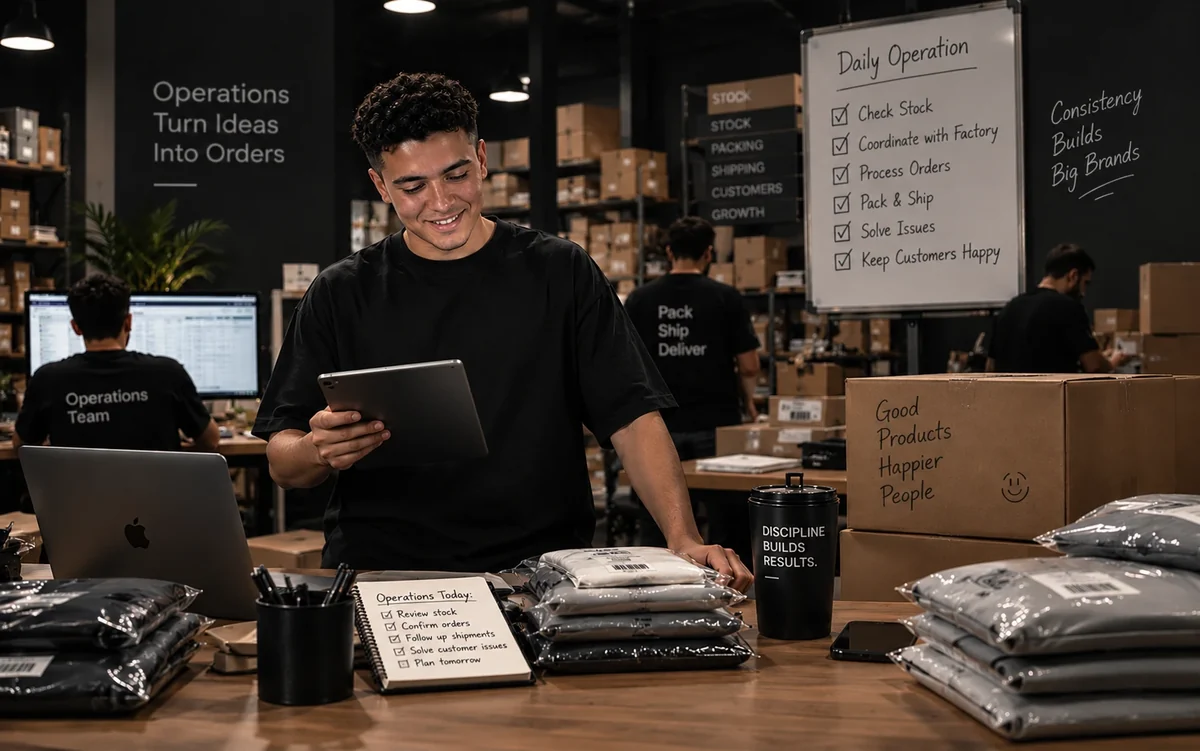
  4. Mahmoud Atef in a warehouse holding a tablet and following the operation, a team working around him among shelves and packed parcels.
    04

    Scaling

    Scaling doesn't just mean raising the budget.

    • Budget: spend more when the economics and the operation can carry it
    • Segments: reach a customer we weren't talking to
    • Markets: a governorate or a country where the opportunity is real
    • Wholesale: open a second sales channel
    • Product: sizes, variations, bundles, new use cases around what works
    • Order value: raise it instead of always chasing more orders

    More budget and more creatives are useful levers. They're just some of them, not all of them.

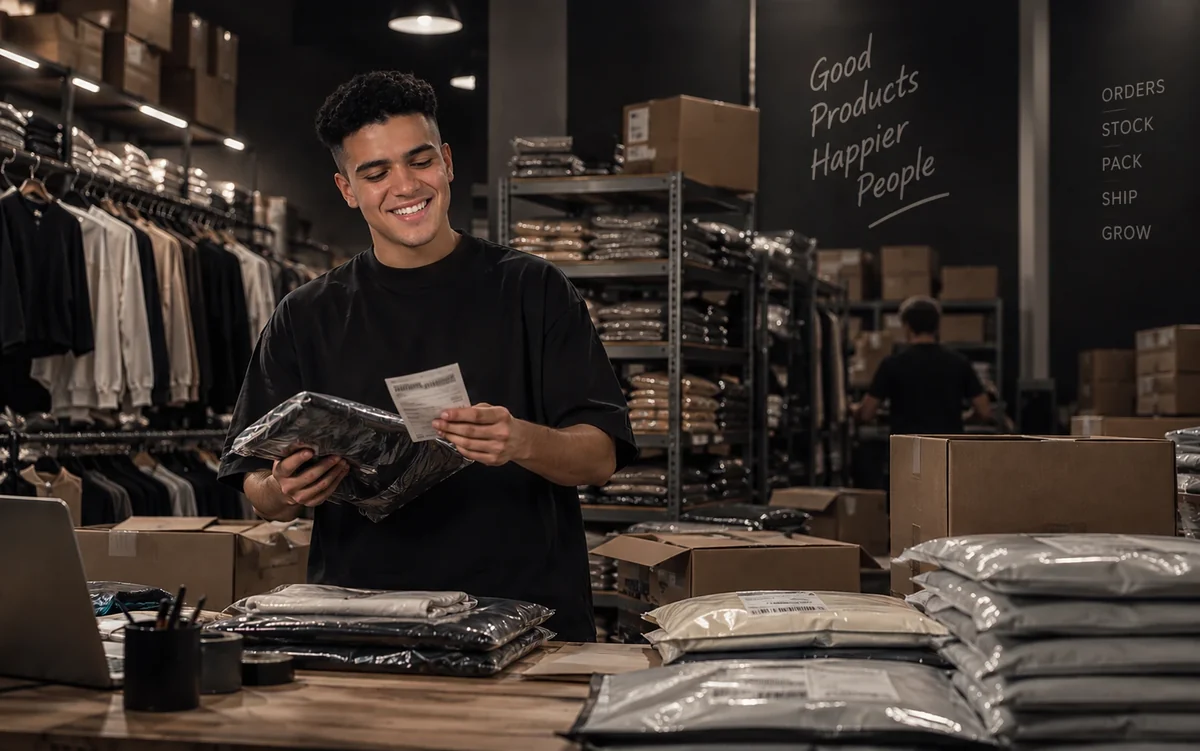
  5. Mahmoud Atef in a warehouse preparing an order, a shipping label in his hand, racks and parcels around him.
    05

    Operations

    The ads can be working very well while the business isn't ready to absorb more.

    • The factory is behind, or stock is running out
    • The warehouse can't keep up with the volume
    • The moderation team is overloaded
    • Shipping and delivery have problems
    • Returns are climbing

    If the operation can't handle more demand, the right move may be to slow down, fix the bottleneck, and then scale again.

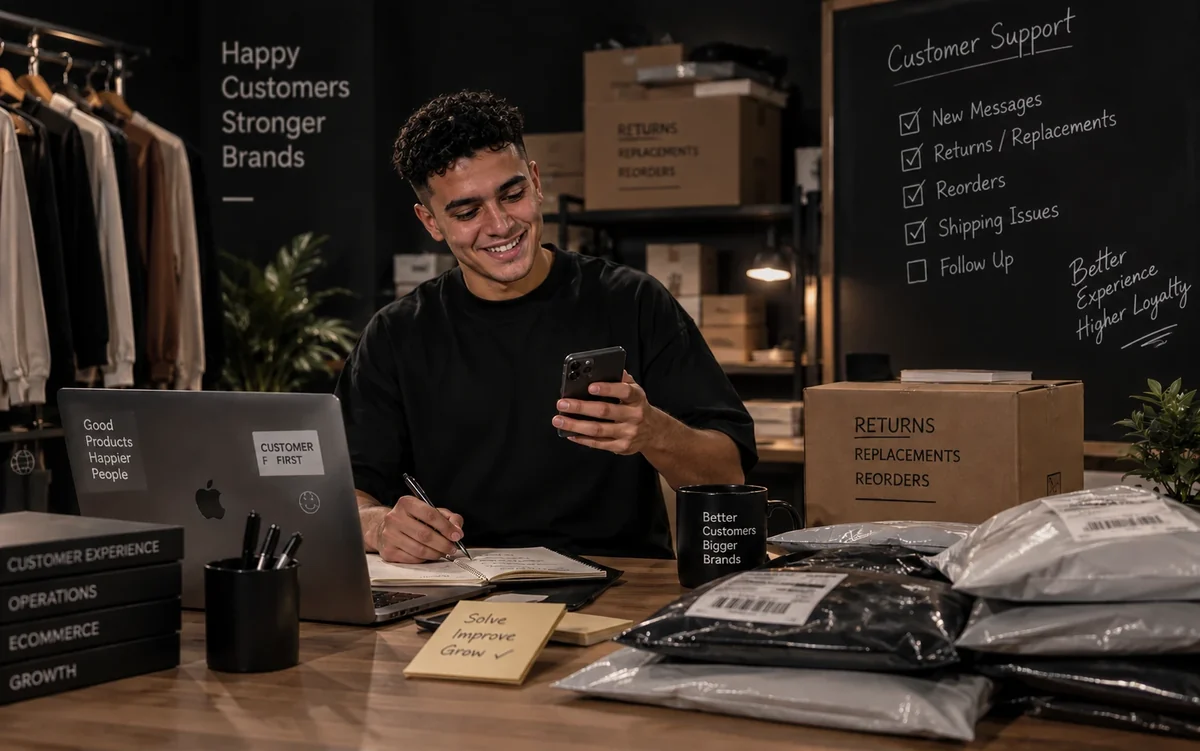
  6. Mahmoud Atef at a desk with a laptop, a phone and a notebook, boxes for returns and replacements and packed parcels around him.
    06

    The numbers aren't the whole story

    A big sales number can look impressive while the business still has problems.

    • Sales are not profit
    • An order taken is not an order delivered
    • ROAS is not ROI: sales per pound of ads is not profit
    • More spend is not automatically more value

    And the figures in this portfolio are real results from specific businesses, products, markets, operations, budgets and circumstances. They're evidence of work that happened, not a promise that every business will produce the same numbers.

Before I say "scale", I ask:

  1. Is the product ready?
  2. Is there still room in the market?
  3. Do the economics make sense?
  4. Can the operation handle more demand?
  5. Where is the next growth opportunity?
  6. Then we decide what to scale and how.

I didn't start with ads. I started by understanding the business, from product to delivery.

The background

The story in the order it happened: the warehouse and the orders, then running the operation, then Bloomy, Shopify and the ads. Every figure comes with its source and period.

Read the full story