01
E-commerce operations
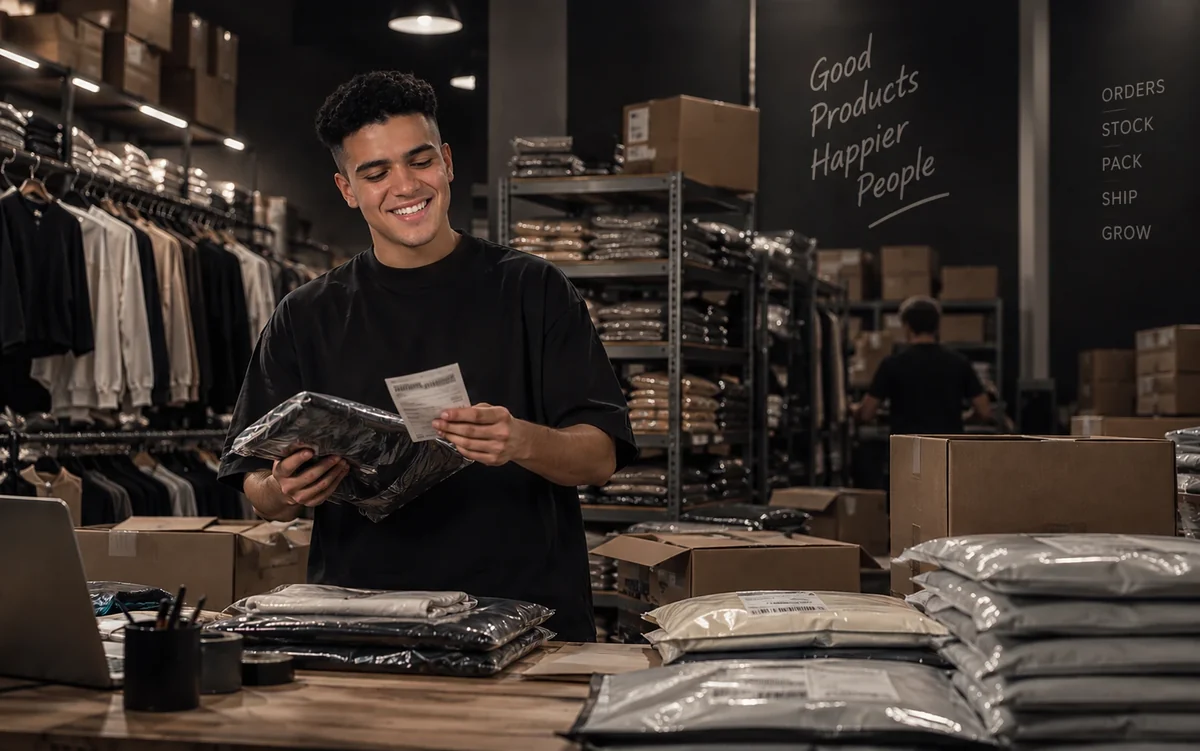
I started in the warehouse, preparing orders. I prepared more than 5,000 orders and received more than 11,000 pieces.
That is where I learned that behind every order there is stock, cost and an operation.
Approximate figures from my time running operations
02
Customers & orders
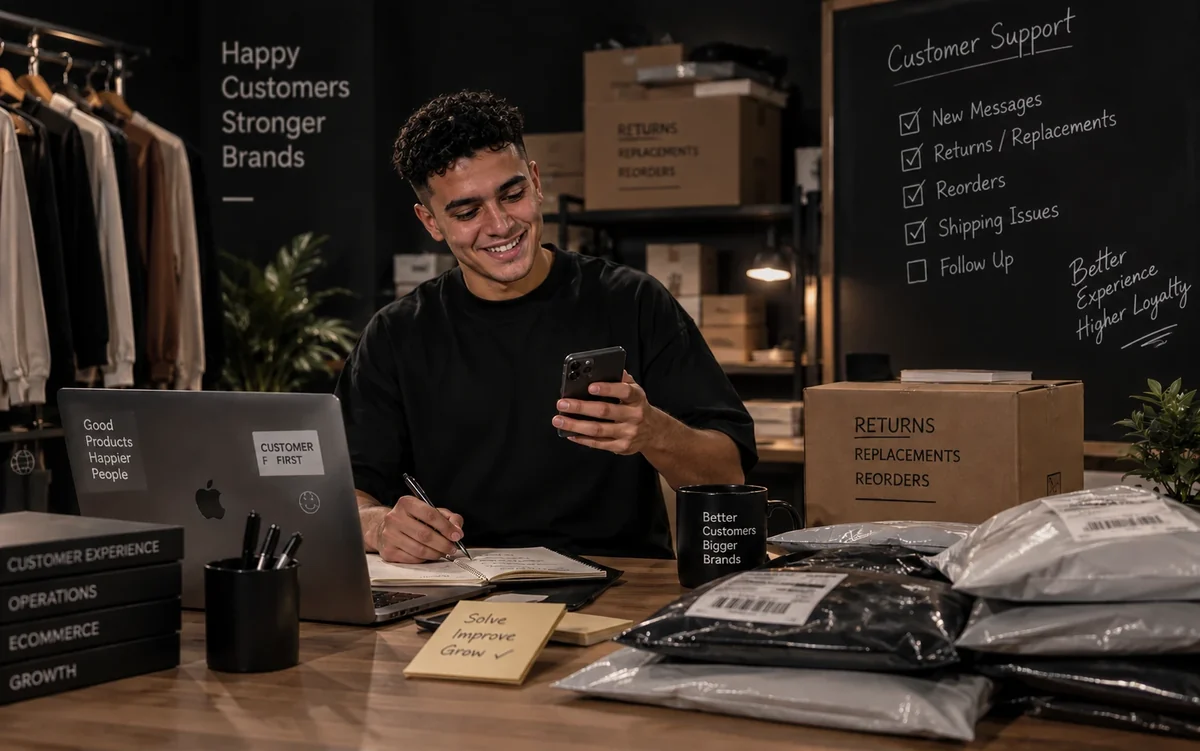
Then I started dealing with customers directly, and saw the problems of returns, reorders and shipping.
I began to understand why an order closes, and why sometimes it never arrives.
Approximate figures from my time running operations
03
Managing the operation
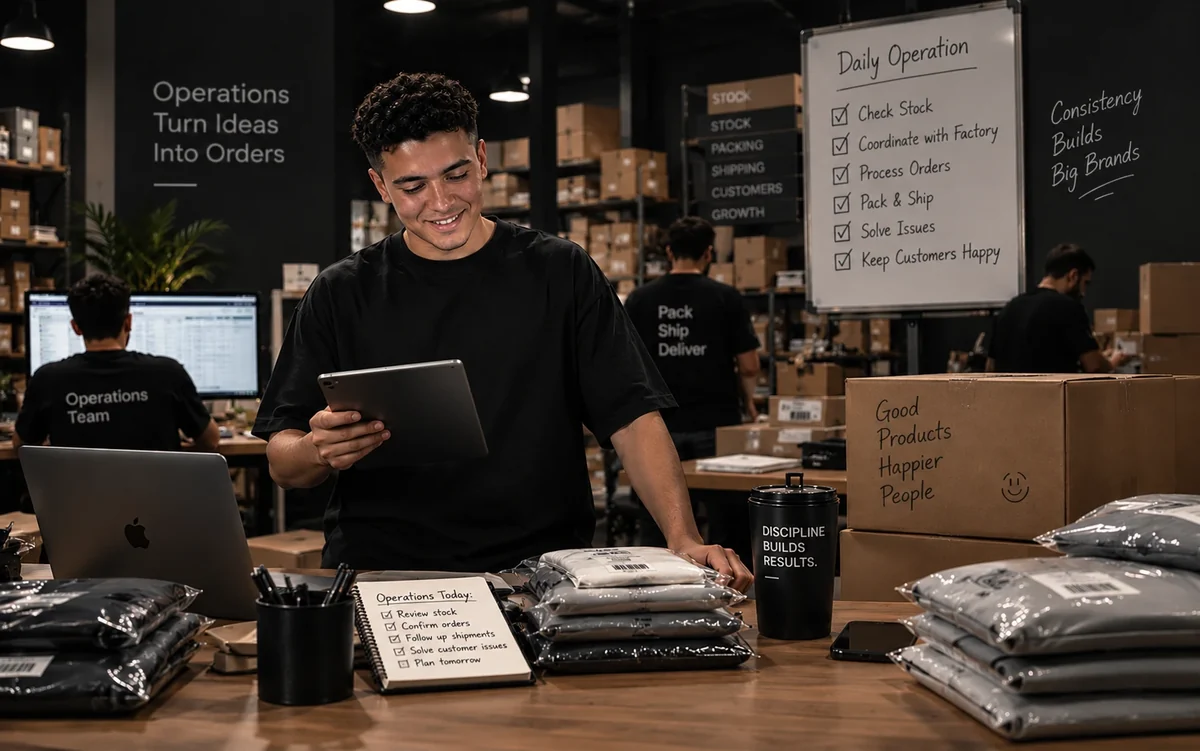
Then I began running a large part of the operation: the moderation team, the stock and what came in, coordinating with the factory and following the daily operation.
Over about six months the business did around EGP 6.5M in sales, in a period when I was responsible for a large part of the operation.
Approximate figures from my time running operations
04
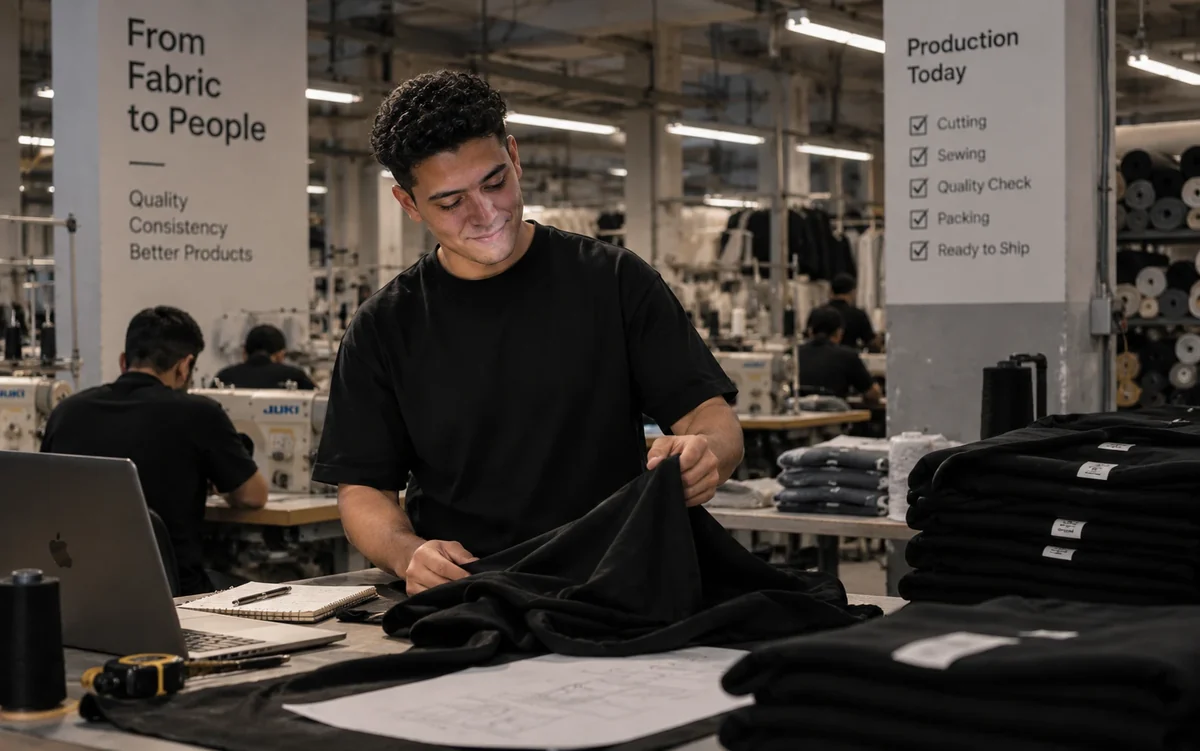
Following production
Then I went deeper into the production side, went down to the factory and saw the manufacturing stages myself.
I am not a production specialist, but it showed me how far a production delay or a faulty product travels: into the stock, into the orders, and in the end to the customer.
05
Bloomy
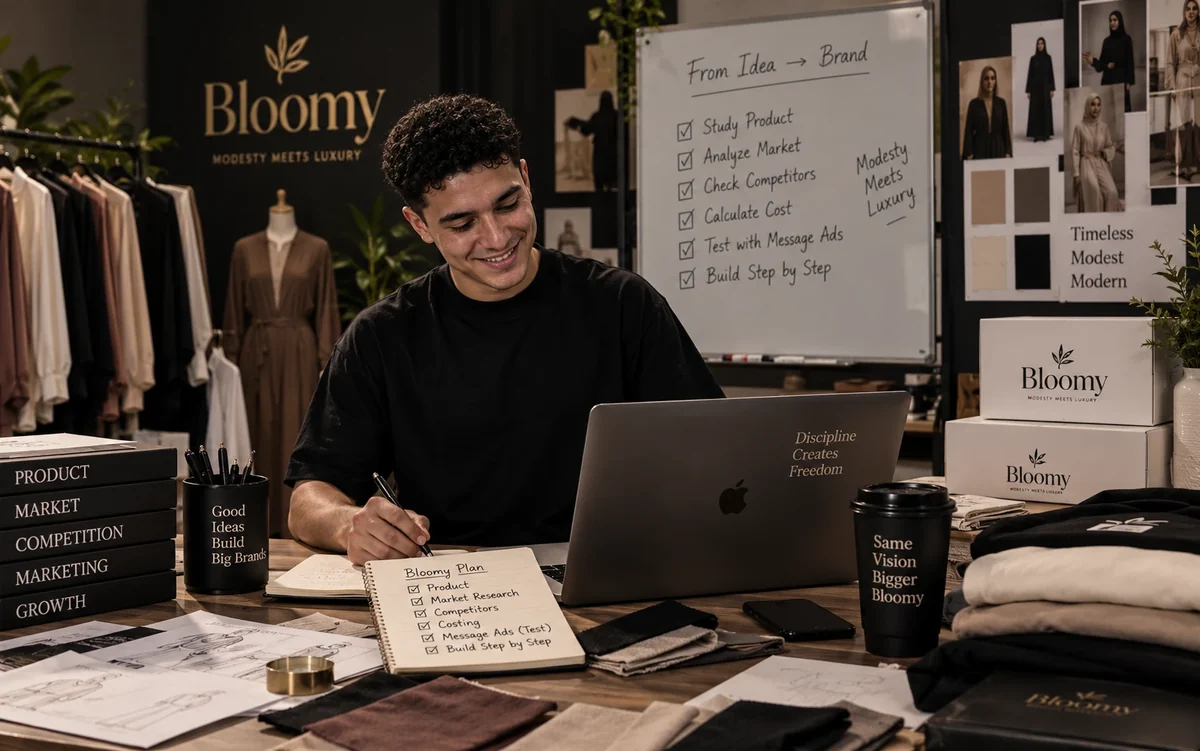
After that role ended, I started Bloomy from scratch.
I studied the product, the market, the competitors and the cost, tested demand with messaging ads, and built the business step by step.
06
Shopify & performance marketing
With Bloomy I went deeper into Shopify, conversion rate and order value, and built the store myself.
I started running Meta Ads, testing creatives and angles, and tying what I saw in Ads Manager to what happened after the order.
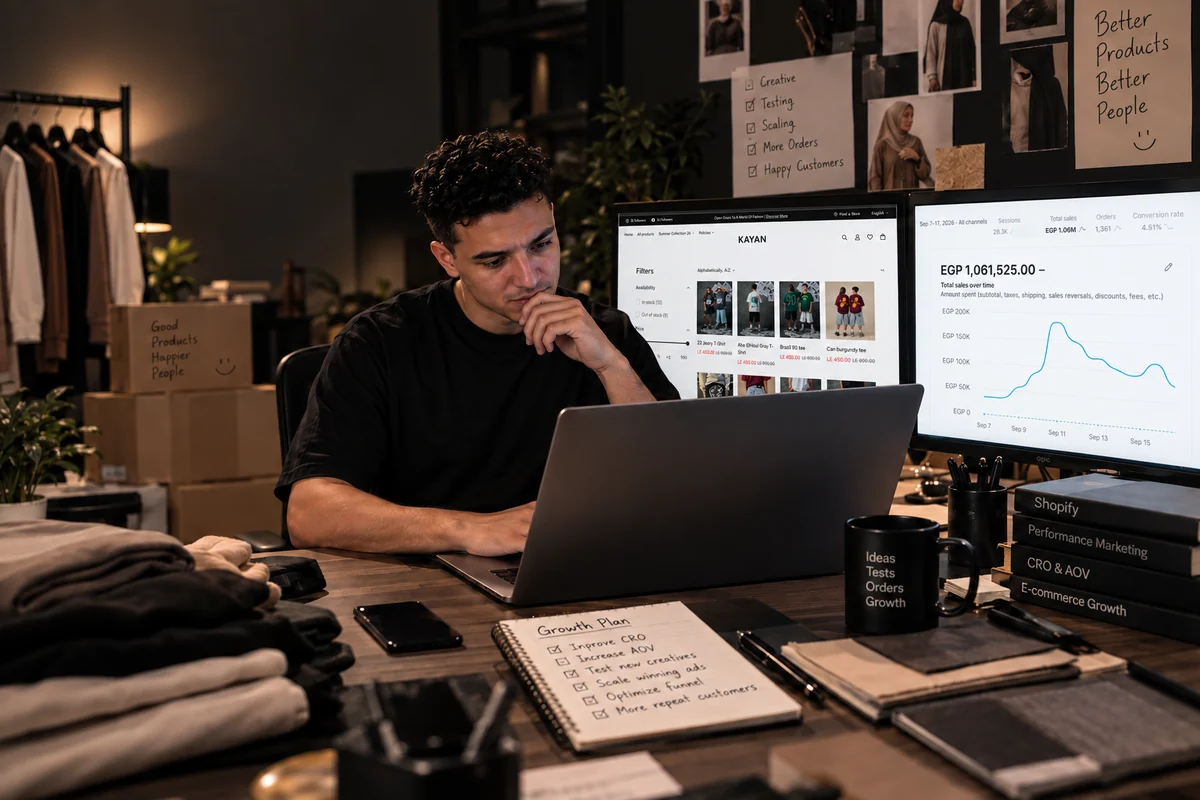
The ad can bring the order, but the whole business decides whether that order is actually profitable.
- Product
- →Market
- →Creative
- →Ads
- →Website
- →Orders
- →Operations
- →Results